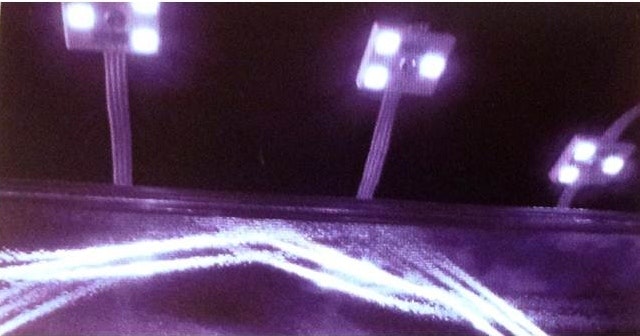
At the Materialica "Lightweight Design for New Mobility" event attached to the eCarTec event in Munich this week there were 228 awards including one for an ugly wheelbarrow so it was all rather indiscriminate. Nonetheless, close attention revealed some interesting items such as PlexiglasTM used for new things such as illuminated electric car exterior in the exhibition and edge lit elements using LEDs in Plexiglas.
The LEDs in Plexiglas, subject of an award to Evonik Industries AG, enable slimmer structures in such things as electric vehicles and therefore smaller fitting depths. The trick lies in special embedded diffuser particles embedded in the polymer ensuring that light fed in at the edges is evenly distributed across the surface. The highly transparent moulded and extruded parts appear to be crystal clear when unlit. The interplay of different colours can be controlled, we are told, so this may strike at the main reason for the future development of OLED lighting - superb control of colour temperature, tint etc., not least to emulate the warm glow of the familiar incandescent bulb and to avoid the unpleasant flickering harshness of compact fluorescent bulbs or the hard colour of a halogen bulb. See www.evonik.com  .
.
 .
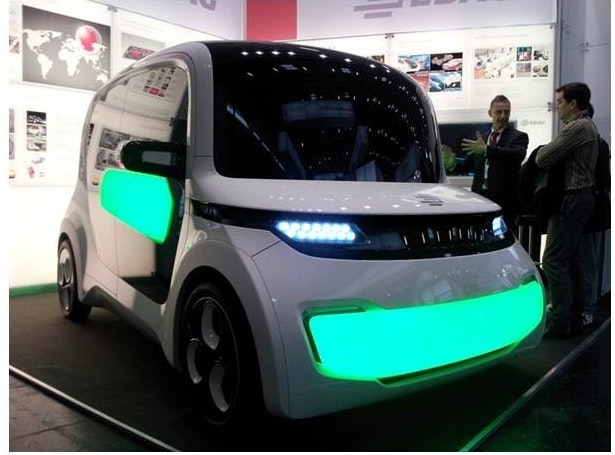
.An electric concept vehicle featuring Plexiglas extensively used on the external lit parts is shown below.
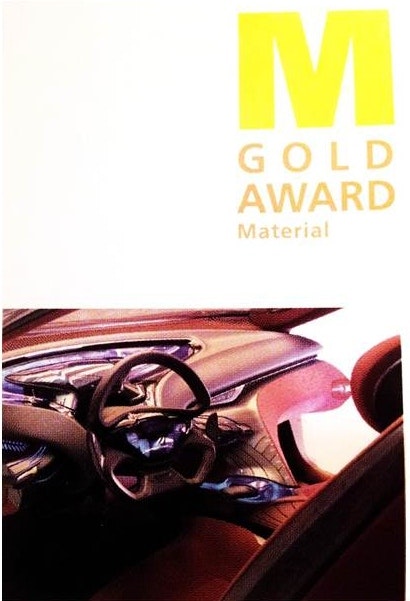
On the other hand, there was an award to Hersteller for the ETTLIN Lux©materials for three dimensional light design. Here, the interaction between the material and the LED behind it creates spatial lighting effects. "This gives fascinating forms and real bodies of light that can be shaped. With the light colour and by changing the surface colour, there can be an interaction between the light and the surrounding area." The versions MoodFabric and Smart Glass, "can be used everywhere where light is used for design and there is ambience of the highest level". So who needs OLED lighting?