

Inductive charging of vehicles in motion has limitations due to safety and power particularly for large vehicles so Sweden is trying a contacted rail. The world's first road that allows electric vehicles to recharge in this way as they drive has been installed in Sweden. Alternatives of intermittent overhead catenary and coils in the road are being tried in Israel, Germany and elsewhere. For more information see the IDTechEx report on electrically smart roads
Around 1.2 miles of electric rail has been built into a public road just outside Stockholm, and plans are in place to expand the project throughout other parts of the country and the world.
The electrified road works by transferring energy from the rail through a moveable arm on the bottom of an electric car or truck. As the vehicle moves over the rail, the arm detects its location and moves into contact with it. When overtaking, the arm automatically raises.
The rail is connected to the power grid and divided into sections that are only powered when vehicles move over them. Energy consumption of each vehicle passing over the rails is calculated by the system, enabling electricity costs to be charged to each user.
The electrified road is being trialled using pure electric electric trucks that have been developed as part of the project.
"One of the most important issues of our time is the question of how to make fossil-free road transportation a reality," said Hans Säll, chairman of the eRoadArlanda consortium, which is responsible for the project.
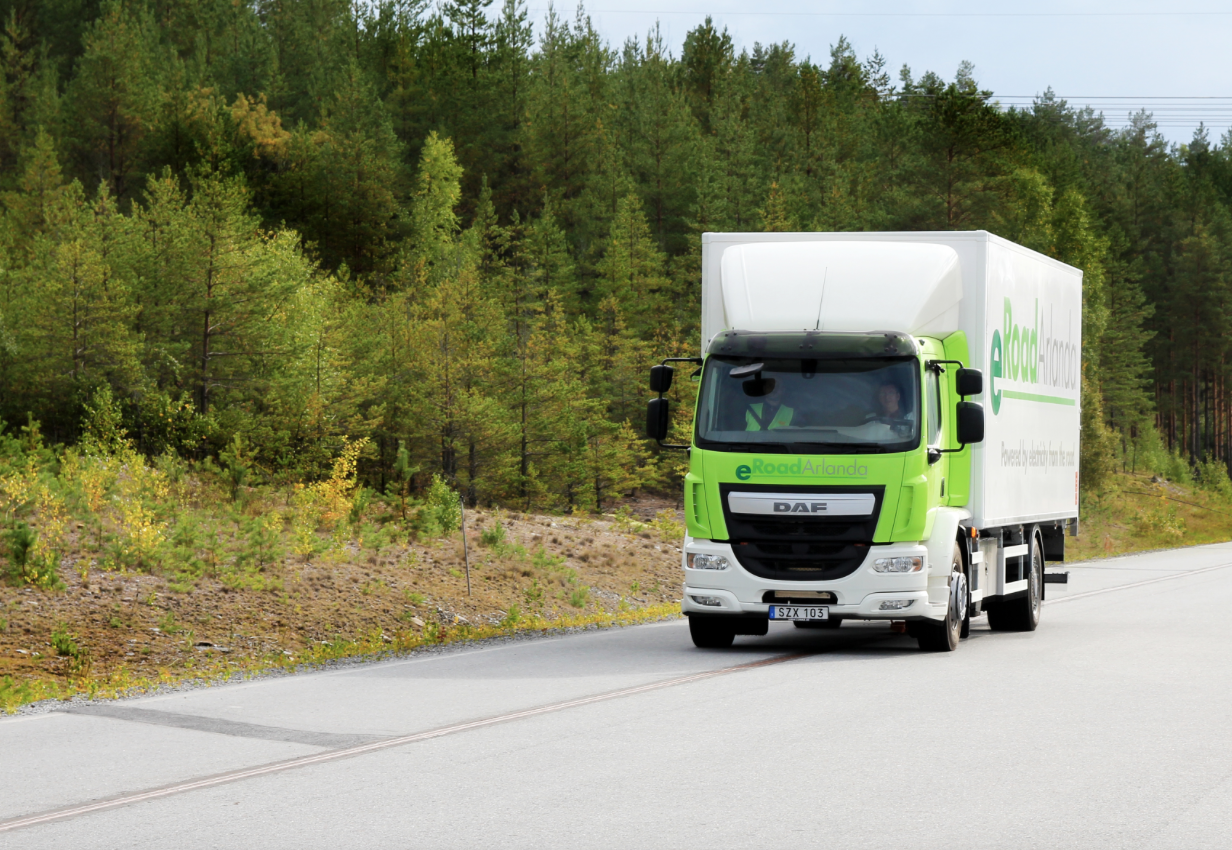
Top image: eRoadArlanda
