

During the next fifteen years, we shall be in the transition to much more energy efficient, quieter aircraft, with much less pollution and dependence on declining hydrocarbon reserves.
One catalyst for this is NASA with its prize for an exceptionally frugal light aircraft that is sure to be either a pure electric or hybrid electric vehicle. In addition, NASA has now revealed three new designs for energy-efficient airplanes that may be commercialised as early as 2025, which are the fruits of contracts it awarded to Boeing, Lockheed Martin and Northrop Grumman to develop and demonstrate cleaner and highly efficient 'super plane' concepts this year.
All of these designs have stringent limits on minimum speed, cargo weight and range, with the prototypes being required to fly at 85% the speed of sound with a range of around 7,000 miles. NASA reportedly said the new aircraft designs have the potential to be used in commercial flights in 2025; depending on the time it takes for the chosen companies to develop them.
The launch coincides with a new range of energy-efficient engines that NASA has launched through its General Aviation Propulsion (GAP) program, which it promises will set the bar in light aircraft affordability and performance. This GAP program has already seen the agency develop the efficient and low fuel consumption Turbofan engine, which it said has enabled a new 'class' of efficient and fast small jets.
We expect electrical propulsion to be a part of such programs worldwide, including silent landing and electric auxiliary power units. Already, electric motors are starting to be adopted in nose wheels for more independence and less pollution when taxiing. Ground Support Equipment GSE is seeing further electrification. There are now many pure electric light electric aircraft and a hybrid Cessna for loner range is being developed.
NASA Green Flight challenge
NASA's innovative partnerships programme and Dr Brien Seeley and his organisation CAFE created the Green Flight Challenge. He spoke on this at the recent successful IDTechEx event "Future of Electric Vehicles" event in San Jose California.
It is a flight-efficiency competition for aircraft that can average at least 87kt (161km/h) on a 320km (175nm) flight while achieving greater than 322 passenger kilometres per 3.79 litres (1USgal). Seeley is looking forward to the inclusion of electric aircraft in the race. "In competitions we have only seen internal combustion engines before, using mogas, pump gas for cars, low lead gasoline, so this is about to change radically with pure battery electric and biofuels," he says.
This will be a flight efficiency competition for aircraft that can average at least 100 mph on a 200-mile flight while achieving greater than 200 passenger miles per gallon (or equivalent use of electricity). The prize for the aircraft with the best performance will be $1.5 million. This is the largest prize ever offered for a general aviation competition.
NASA is spending $2 million over five years on contests held by the CAFE Foundation and backed by Boeing Phantom Works. In August 2009, the inaugural NASA Personal Air Vehicle Centennial Challenge handed out $250,000 in prizes rewarding the efficiency and noise reduction of personal air vehicles. The top place went to the owner of a Pipistrel Virus motorglider.
The 2010 contest included its first Green Prize of $50,000 for a craft that achieves at least 100 miles per hour and the equivalent of 100 miles per gallon. Renamed the General Aviation Technology Challenge, the contest will dole out a total of $300,000. Supporters of such competitions hope they can convince people that air travel could become the greenest form of transportation. "It will change society, the way we work, the way we live, the way cities grow," said Richard Jones, a technical fellow at Boeing Phantom Works.
European Community
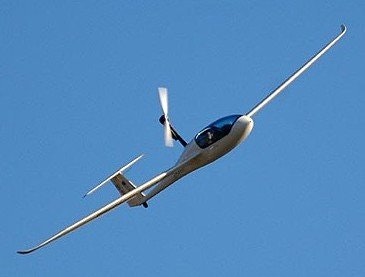
Source: Pipistrel
Support for light aircraft development is also strong in the European Union, which contributed about 20% of the $2.3 million that Pipistrel of Slovenia spent creating the Taurus Electro, for instance. It is collaborating with the University of Stuttgart on fuel cell powered manned aircraft and Unmanned Air Vehicles UAVs.
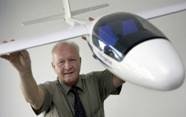
Source: University of Stuttgart
For more see the new IDTechEx report: Electric Aircraft 2011-2021.
The IDTechEx event series Future of Electric Vehicles Europe 2011 has now been renamed: Electric Vehicles Land, Sea + Air 2011
to reflect its unique of covering the whole subject.
The next such event will be "Electric Vehicles Land, Sea + Air Europe" in Schwabenlandhalle, Fellbach, Stuttgart, Germany on June 28 - 29.
There will be a two day conference and exhibition, including an investment stream, visits to local centres of excellence in the subject, awards dinner and optional Masterclasses before and after the conference. There is more work on electric vehicles in the Stuttgart region than in any other part of Europe. It includes facilities of Bosch, Porsche, Mercedes, e-bike, e-plane, solar airship and solar boat developers and many others together with a huge academic effort.
There are also substantial initiatives backed by local government and major electric utilities in the region. If you are interested in presenting, sponsoring or exhibiting please contact Dr Peter Harrop p.harrop@idtechex.com in Europe or Raoul Escobar-Franco Raoul@idtechex.com in the USA.
For more attend: Electric Vehicles Land, Sea + Air 2011
.At the uniquely comprehensive Electric Vehicles Land Sea Air in Stuttgart in June, the electric aircraft session has presentations from the DLR German Aerospace Center, ENFICA-FC of Italy, EADS Innovation Works in Europe's largest aerospace company and the University of Michigan in the USA.
Also read the new report Energy Harvesting for Electric Vehicles 2011- 2021 .
